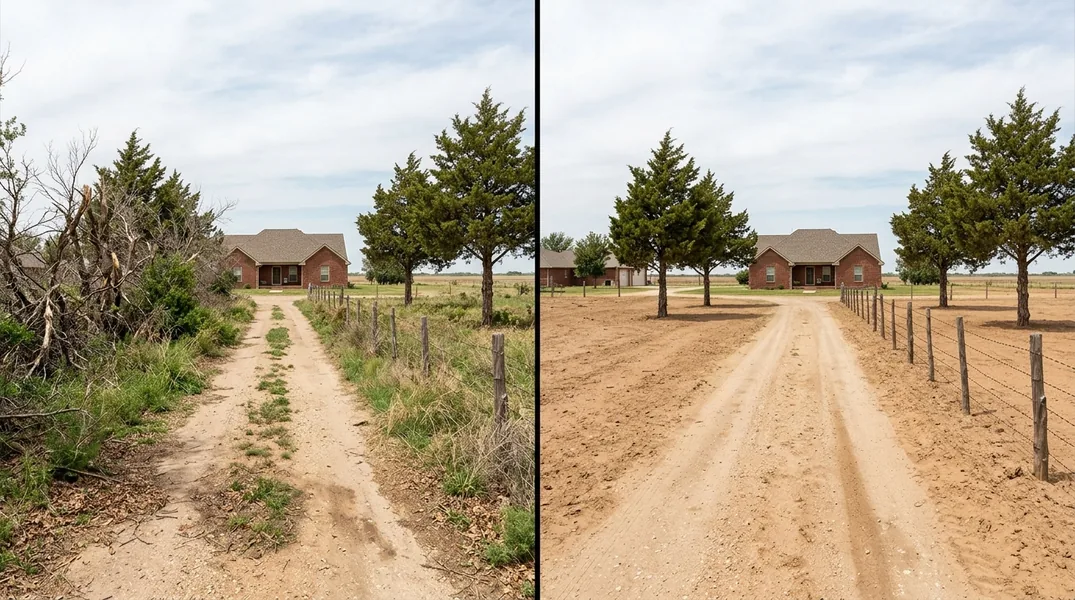
Understanding Siberian Elms and Their Popularity in Lubbock
Siberian elms have long been a fixture in yards and along streets throughout Lubbock. These hardy deciduous trees were planted extensively across the Texas Panhandle because they grow quickly, tolerate drought conditions, and provide reliable shade in a climate where large trees can be scarce. Homeowners and landscapers appreciated their vigor and adaptability to the region's challenging growing environment.
However, what once seemed like an ideal solution has proven problematic over time. As Siberian elms mature, their structural weaknesses become increasingly apparent. Many property owners in Lubbock are now discovering that their mature elms are becoming liabilities rather than assets. Understanding why these trees fail is the first step toward making informed decisions about your landscape and protecting your home and family.
Why Siberian Elms Break: The Structural Problems
Siberian elms have a fundamental structural weakness that becomes more pronounced as they age. Unlike trees with strong central leaders and well-distributed branch architecture, Siberian elms tend to develop multiple large branches that originate from the same point or very close together on the trunk. This creates what arborists call a weak crotch angle, where branches meet the trunk at an acute angle rather than a stronger, wider angle. When branches grow at these narrow angles, the wood fibers don't interlock properly, making the connection inherently weak and prone to failure.
The wood itself also contributes to the problem. Siberian elm wood is relatively soft and brittle compared to native Texas species like live oak or pecan. This means that even moderate stress from wind, ice accumulation, or the weight of dense foliage can cause branches to snap and split. In Lubbock, where spring storms and occasional ice storms are part of the weather pattern, Siberian elms are particularly vulnerable. A single severe weather event can cause catastrophic damage, with large branches crashing down unexpectedly.
Additionally, Siberian elms are prone to co-dominant stems, where two or more trunks of nearly equal size grow upward from the base. As these stems mature and add weight, they can split apart at the crown, essentially tearing the tree in half. This type of failure is sudden, violent, and extremely dangerous if it occurs near structures or people.
Signs Your Siberian Elm Needs Attention or Removal
Early detection of problems can help you decide whether Tree Trimming & Pruning might help or whether Tree Removal is necessary. Look for visible signs of structural stress, such as large cracks running vertically or horizontally along the trunk or major branches. Bark that is peeling away, exposed wood, or areas where branches are rubbing together are all warning signs. If you notice dead branches throughout the canopy or one side of the tree appears noticeably thinner or weaker than the other, the tree may be failing from the inside out.
Leaning is another red flag. If your Siberian elm has developed a noticeable lean away from vertical, the root system may be compromised, or the trunk may have internal rot. Trees that have previously had major branches removed or that show signs of past storm damage are at higher risk for future failure. Pay attention to whether branches are hanging over your roof, garage, deck, or your neighbor's property. Even a healthy-looking Siberian elm in a precarious position poses an unacceptable risk.
Listen for sounds during or after storms. Creaking, cracking noises, or the sudden sound of branches falling are clear indications that your tree is in distress. If you observe any of these warning signs, it is time to call a professional. The experienced arborists at Lubbock Tree Service can assess your tree's condition and recommend whether pruning or removal is the safest option.
When to Prune vs. When to Remove Your Siberian Elm
Not every Siberian elm requires immediate removal. A younger tree with good structure and no major defects might benefit from strategic Tree Trimming & Pruning to improve its form and reduce risk. Proper pruning can remove branches with weak angles, eliminate dead wood, and reduce the overall load on the tree's framework. However, pruning cannot fix fundamental structural problems like co-dominant stems or severely compromised wood quality.
For mature Siberian elms, the decision often comes down to risk versus benefit. If the tree is large, old, and showing multiple signs of structural weakness, the cost and effort of ongoing maintenance may exceed the value the tree provides. A tree that requires frequent pruning to remain safe, that has already dropped major branches, or that is positioned directly over your home or a neighbor's is typically a candidate for removal. Similarly, if the tree is diseased, infested, or showing signs of decline, removal is often the most practical solution.
The safest approach is to have a professional evaluation. Lubbock Tree Service offers free estimate consultations where our arborists can examine your tree in detail and provide honest recommendations. We will not push you toward unnecessary removal, but we will be direct about risks and help you weigh your options.
The Tree Removal Process for Large Siberian Elms
Removing a large Siberian elm is not a DIY project. These trees can be 50 feet or taller, with massive branches and unpredictable failure patterns. Professional Tree Removal requires specialized equipment, trained crew members, and comprehensive insurance coverage. Our team uses cranes, bucket trucks, and rigging equipment to safely dismantle trees piece by piece, controlling where every branch and section falls.
The removal process typically begins with an assessment of the site, including proximity to structures, power lines, and neighboring properties. We plan the safest approach and obtain any necessary permits. The tree is then carefully taken down in sections, working from the top down. Each piece is lowered or guided to the ground under controlled conditions. Once the trunk is removed, the remaining stump can be ground out using Stump Grinding equipment, leaving your yard ready for new landscaping or other uses.
The entire process, from initial consultation to final cleanup, is designed to minimize disruption to your property and ensure the safety of your family and neighbors. All debris is removed, and the site is left clean and ready for whatever comes next.
Emergency Tree Service: What to Do After a Siberian Elm Fails
If a Siberian elm branch or the entire tree has fallen on your property, you need prompt assistance. Fallen trees and large branches can block driveways, damage vehicles, crush fences, or threaten the structural integrity of your home. If a tree is resting against your roof or has damaged power lines, the situation is even more urgent. Do not attempt to remove large branches or fallen trees yourself. Chainsaws, ladders, and heavy wood create serious injury risks.
Lubbock Tree Service provides Emergency Tree Service to respond quickly when storms strike. We can clear debris, make your property safe, and remove hazardous trees before they cause additional damage. Our crews work around the clock during severe weather events to help homeowners throughout the region recover. If you experience tree damage, call us immediately at (806) 482-1522 to discuss your situation and get emergency assistance.
Planning Your Landscape After Siberian Elm Removal
Once a problematic Siberian elm is gone, you have an opportunity to replant with species better suited to Lubbock's climate and your long-term landscape goals. Consider native or well-adapted trees like live oak, desert willow, or native ash species that offer the shade and aesthetic benefits of an elm without the structural liabilities. These alternatives are hardy, require less maintenance, and provide better wildlife habitat.
The removal of a large tree also opens up space for other landscaping improvements. You might add multiple smaller trees to create a more diverse canopy, install shrubs and ground covers, or simply enjoy the additional sunlight in your yard. Our team at Lubbock Tree Service can discuss replanting options and help you create a safer, more attractive landscape for your home and family.
If you are dealing with a Siberian elm on your property and would like professional guidance, we encourage you to reach out. Contact Lubbock Tree Service today at (806) 482-1522 or visit our website for a free estimate and expert advice tailored to your specific situation.
Looking for a professional tree service contractor in Lubbock? Lubbock Tree Service responds fast for all your tree service needs.
Get a Free QuoteOur services: Tree Removal · Tree Trimming & Pruning · Stump Grinding