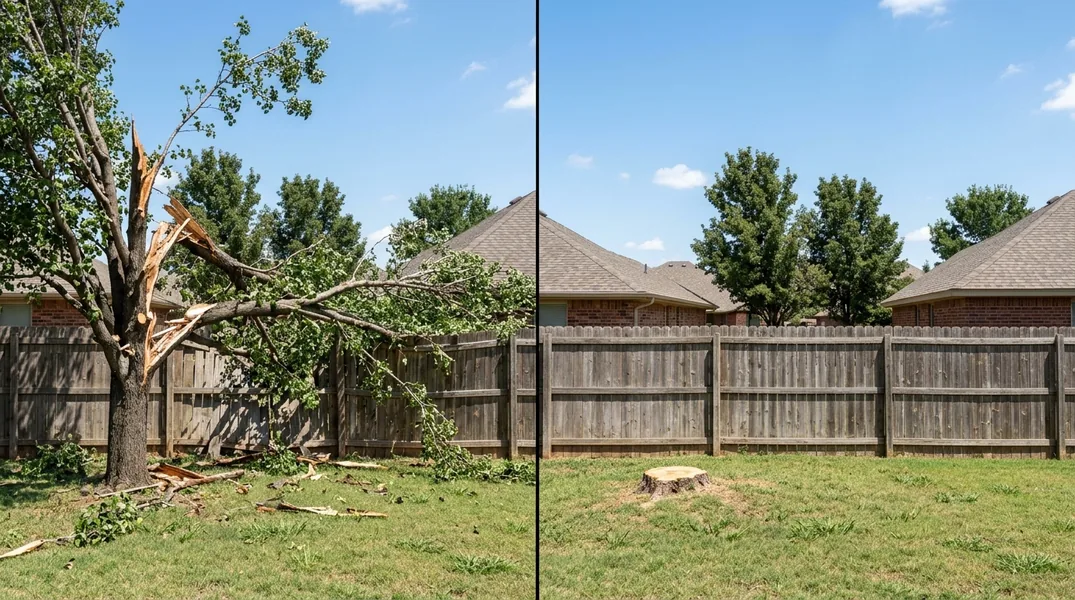
Understanding the Difference: Tree Trimming vs. Tree Removal
When you look at a struggling tree in your yard, the question often comes down to this: can it be saved, or does it need to come down? The answer isn't always obvious to homeowners, and that's where professional expertise makes all the difference. Tree Trimming & Pruning and Tree Removal are two fundamentally different approaches to tree care, each with its own purpose, benefits, and appropriate use cases.
Tree Trimming & Pruning is a preventive and restorative practice that removes dead, diseased, or overgrown branches while keeping the tree alive and healthy. It's designed to improve the tree's structure, encourage new growth, and reduce hazards like low-hanging limbs or branches that interfere with power lines. In contrast, Tree Removal is a more drastic solution that eliminates the entire tree from your property. This is necessary when a tree is beyond saving, poses a safety risk, or is simply in the wrong location for your landscape goals.
For homeowners in Lubbock, understanding this distinction is crucial because the Texas climate and soil conditions present unique challenges. Trees here face intense heat, occasional severe weather, and competition for water resources. An experienced arborist can assess your tree's health and recommend the most appropriate solution for your specific situation.
How an Arborist in Lubbock TX Evaluates Your Tree
When you call Lubbock Tree Service at (806) 482-1522 to schedule a consultation, our experienced arborists follow a systematic evaluation process. This isn't a quick glance from the ground. A thorough assessment involves examining the tree's overall health, structural integrity, signs of disease or pest damage, and its proximity to structures, utilities, and other landscape features. We look at the canopy density, branch angles, bark condition, and root health whenever possible.
One of the first things an arborist checks is whether the tree shows signs of disease or insect infestation. Common issues in Lubbock include scale insects, spider mites, and fungal diseases that thrive in our dry climate. If the damage is localized to certain branches, trimming may be sufficient. However, if the disease has spread throughout the tree's vascular system or the structural damage is extensive, removal becomes the safer and more practical choice.
Arborists also assess the tree's structural soundness by looking for signs of decay, hollow sections, severe lean, or multiple trunks with weak crotch angles. A tree with a 30-degree branch angle is much stronger than one with a 10-degree angle, which can split under stress. They'll also evaluate whether the tree is still actively growing and whether it has the biological capacity to recover from pruning or if it's in terminal decline.
Signs Your Tree Needs Trimming and Pruning
Most healthy trees benefit from regular tree pruning in Lubbock to maintain their shape, health, and safety. If your tree has dead branches, these should be removed promptly because they pose a falling hazard and can harbor pests and disease. Similarly, branches that cross over one another, grow inward toward the trunk, or create a dense canopy that blocks sunlight should be pruned back.
Another common reason for trimming is to clear branches away from your roof, gutters, or windows. Branches rubbing against your house during wind events can damage siding and roofing materials. If branches are hanging over a patio, driveway, or walkway, trimming reduces the risk of falling limbs and injuries. In some cases, trees may be growing into power lines, which poses a serious electrical hazard and typically requires professional attention.
Young or recently transplanted trees often benefit from formative pruning to establish a strong central leader and balanced branch structure. This early investment in proper pruning can prevent major structural problems later in the tree's life. Trees that have been topped or severely pruned in the past may also need corrective pruning to restore a natural shape and improve their long-term health and appearance.
When Tree Removal is the Right Choice
Tree Removal becomes necessary when a tree is dead, dying, or poses an unacceptable risk to your property and safety. A tree that has lost more than 50 percent of its canopy, has a major split in the trunk, or is leaning severely toward a structure is typically a candidate for removal. If the tree is infested with wood-boring beetles or affected by a disease like oak wilt that cannot be stopped through pruning, removal is often the only option to protect nearby trees.
Safety is the primary driver of most removal decisions. A dead or dying tree can drop large branches without warning, especially during storms. If the tree is close to your house, garage, pool, or a neighbor's property, the liability risk becomes significant. Trees that have been damaged by storms, lightning, or previous poor pruning practices may have compromised structural integrity that makes them unpredictable and dangerous.
Sometimes, Tree Removal is simply a matter of landscape design. Perhaps the tree is blocking a view, competing with newer plantings, or its root system is damaging your foundation or underground utilities. Whatever the reason, our team at Lubbock Tree Service can handle the removal safely and efficiently. After removal, many homeowners also opt for Stump Grinding to reclaim their yard space completely.
Tree Removal Cost in Lubbock: What to Budget
The cost of tree services varies significantly based on several factors, and there's no one-size-fits-all answer. Tree size is the primary driver of cost, with larger trees requiring more time, equipment, and labor. A 30-foot oak will cost considerably less to remove than a 60-foot pecan tree. The tree's location also matters, since removing a tree close to structures, power lines, or fences requires more careful planning and specialized equipment.
The tree's condition affects pricing as well. A healthy tree with a clear trunk and good branch structure is straightforward to remove. A dead tree that's brittle, a tree with multiple trunks, or one that's already partially fallen presents additional challenges and safety considerations. Ground conditions, accessibility for equipment, and whether you need Stump Grinding afterward will also influence the final estimate. To understand what your specific tree removal or trimming project will cost, we recommend getting a free estimate from Lubbock Tree Service. Our team can provide accurate pricing once we've assessed your tree in person.
Making the Final Decision: When to Call Lubbock Tree Service
If you're uncertain whether your tree needs trimming or removal, the best course of action is to have an experienced arborist evaluate it. Waiting too long can turn a trimming situation into a removal emergency, especially if the tree becomes unstable or diseased. Conversely, removing a tree prematurely means losing the shade, privacy, and property value that mature trees provide.
Lubbock Tree Service has the expertise to guide you toward the right decision. We serve homeowners throughout Lubbock and surrounding areas with professional tree care advice and quality workmanship. Whether your tree needs careful pruning to restore its health or complete removal for safety reasons, our team is equipped to handle the job. Call us today at (806) 482-1522 or visit our website to request a free estimate. We're ready to help you make the best decision for your trees and your property.
Looking for a professional tree service contractor in Lubbock? Lubbock Tree Service responds fast for all your tree service needs.
Get a Free QuoteOur services: Tree Removal · Tree Trimming & Pruning · Stump Grinding